
How to Protect Your Kids’ Emotional Wellbeing When the Other Parent Won’t Cooperate
Share article


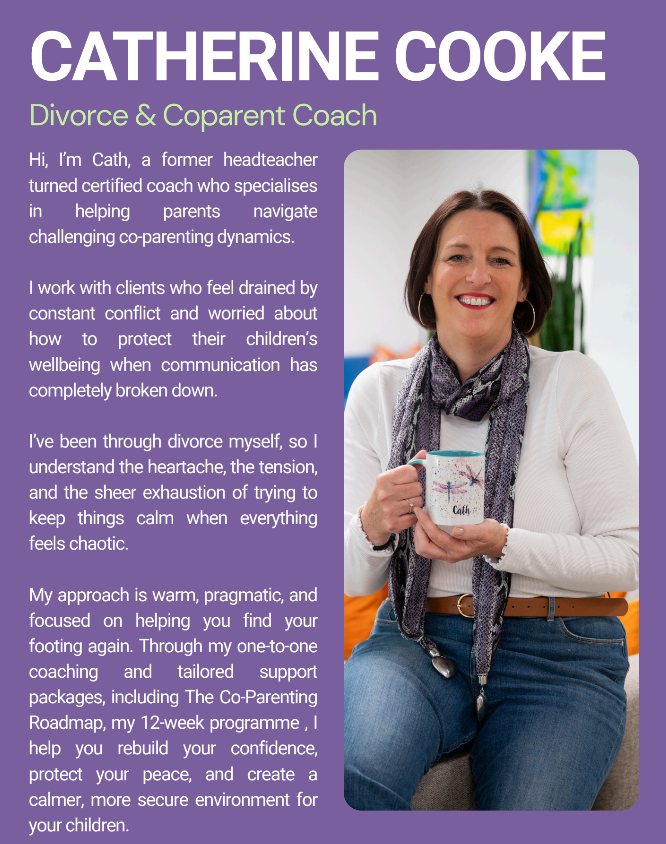
Today's post comes from Divorce and Coparent Coach Catherine Cooke.
When you are in a high-conflict co-parenting dynamic, it can feel overwhelming. You are trying to manage the other parent’s behaviour as well as trying to protect your children in the process. This can feel very stressful, especially when you are dealing with someone who won’t cooperate such as changing plans last minute, undermining routines and sending nasty messages.
Whilst this is not ideal for children, it is important to remember that children do not need perfect parenting. One calm and steady parent makes a huge difference and that can be you. This is why it is vital to manage your own stress levels so that you can be the model of calm for your children.
This looks like:
- Taking care of your own mental health and finding some time to relax
- Keeping things as predictable as possible in your home
- Giving time for your children to acclimatise to a different parenting style when they return home
If your children come home feeling stressed, upset or acting out, it may be a sign that something has unsettled them at the other parent’s house. If they share something that raises genuine safeguarding concerns, it’s important to take that seriously. This may mean seeking legal advice or involving the courts where appropriate.
However, it’s also common for children to return dysregulated simply because they’re tired, overstimulated, or things have felt a bit chaotic or disorganised in the other home. These situations can be frustrating for you, especially if you’re the one dealing with the emotional fallout, but they are not safeguarding issues.
In these moments, the best thing you can do is give your child space and time to settle and regulate. They will take their emotional cues from you if you’re calm and steady, it helps them to feel safe and grounded. If you’re anxious, frustrated, or probing them with questions about what happened, they may start to feel caught in the middle.
What children need most is to know that you can handle whatever they bring to you, that you’re a safe, steady base. They’re not expecting you to fix everything. Sometimes, they just need you to listen, validate their feelings, and walk alongside them until they feel okay again.
At certain flashpoints like handovers, the best thing you can do for your children is to show them that big feelings can exist but they are still emotionally safe. That means processing your own emotions effectively away from your children.
Things you can do to smooth transitions between one home and the other is to have a ritual that happens every time they come back. Or a special check-in activity/chat to settle them before dinner or bedtime.
One of the biggest threats to children’s emotional wellbeing in high conflict co-parenting isn’t the arguments, it's the pressure they feel over loyalty. To avoid this its essential that:
- You don’t pressure them to tell you what happens at the other house
- You don’t share adult frustrations (even subtly) and be mindful that they may hear you in conversation with someone even if they aren’t in the same room
- Children are not used to pass on messages. Even if your ex does this, respond directly to them, not through the child.
Even well-meaning questions or reactions to something they repeat about the other parent can make them feel conflicted, like they have to protect your feelings or manage your reactions. Over time, this can stop them from opening up at all.
If this sort of thing is happening, you can try using neutral phrases like:
- You don’t need to worry about grown-up stuff
- Both homes can be different, and that’s okay.
- You are allowed to love both parents.
Remember that children don’t need a perfect parent. They need a present, emotionally available one and that includes modelling boundaries, self-respect and strategies to calm down. This also means that is is vital to protect your own wellbeing because that’s the key to them feeling emotionally safe.
Join Catherine live on the Frolo app on Wednesday 29th April at 8pm - FREE for Frolo members! Register here: Chaos-Proof: 3 Shifts for Peaceful Co-Parenting
Sign up to our newsletter
The latest advice from the Frolo blog, community highlights and upcoming meetups. Every week, free.
Unsubscribe any time. Privacy Policy
Follow us

