
ADVERTISEMENT FEATURE WITH BIOJRNL
Biojrnl has sponsored this article.
Handovers involve a strange amount of luggage. School shoes, homework, a favourite toy, the coat that somehow ended up at the wrong house again. Health information is easier to miss because you cannot see it in the bag.
The NHS says a child can have more than one person acting on their behalf online. That sounds as if two households are covered. But there is an important condition: the parent applying for access and the child must be registered at the same GP surgery.
Living at a different address is allowed, but the children's guidance does not set out another online route for a parent registered at a different surgery. If that applies to you, ask the child's surgery what other access it can offer. Before setting up access, the surgery must also check with anyone else who shares parental responsibility.
Even when both parents can see the online record, it does not replace a handover. It will not tell the other household that a child was feverish on Tuesday, stopped using a cream because it stung or needs to finish a course of medicine over the weekend.
How do you know whether medicine has been given?
Many parents who share care will recognise the evening text: "Has she had her medicine?"
Sometimes the answer is immediate. Sometimes one parent is trying to remember a rushed morning while the other is looking at a bottle and wondering whether to wait.
The useful answer is the one written down at the time. Record the name from the label, the amount and when it was given. If a doctor or pharmacist gave instructions, copy those words rather than rewriting them from memory.
Use the proper name of a medicine rather than its colour or the shape of the box. Packaging changes, and a description that felt obvious last month may not be obvious next time.
The same applies to symptoms. "He has been a bit off" may be all you had time to send, but a date and a plain description are more useful later. You do not need a theory about the cause. Record what you noticed.
What should travel between homes?
A useful health handover is usually short. It should cover medicine given that day, anything that changed, current symptoms, upcoming appointments and advice from a healthcare professional. Allergies and emergency contact details should be easy to find whenever somebody else is caring for the child.
One simple format is enough:
Medicine given: name, amount and time
Changes since the last handover:
Advice we were given:
Next appointment:
This is deliberately boring. Dates, names and actions are easier to use than a long account of the week. Relationship history belongs somewhere else.
What happens as children get older?
Online access changes as a child becomes more independent. The NHS guidance says most surgeries have an automatic cutoff between 11 and 14 to protect an older child's confidentiality. Access usually ends at 16 and may sometimes be restored with the child's consent.
Nothing is deleted when access ends. The medical record remains at the surgery. What changes is who can see it online.
At home, an older child should have a say in what is passed between adults, while parents still act when safety requires it. A routine update should help them move between homes without making every private detail part of the handover.
Which system will people actually use?
A shared spreadsheet can work if both parents use it. A notebook works if it travels with the child. Messages work until the detail you need is buried between school reminders and weekend plans.
Choose something quick enough to update on an ordinary Tuesday. If only one parent keeps the record, it can still help at appointments. If both take part, agree where the latest information lives.
Where does Biojrnl fit?
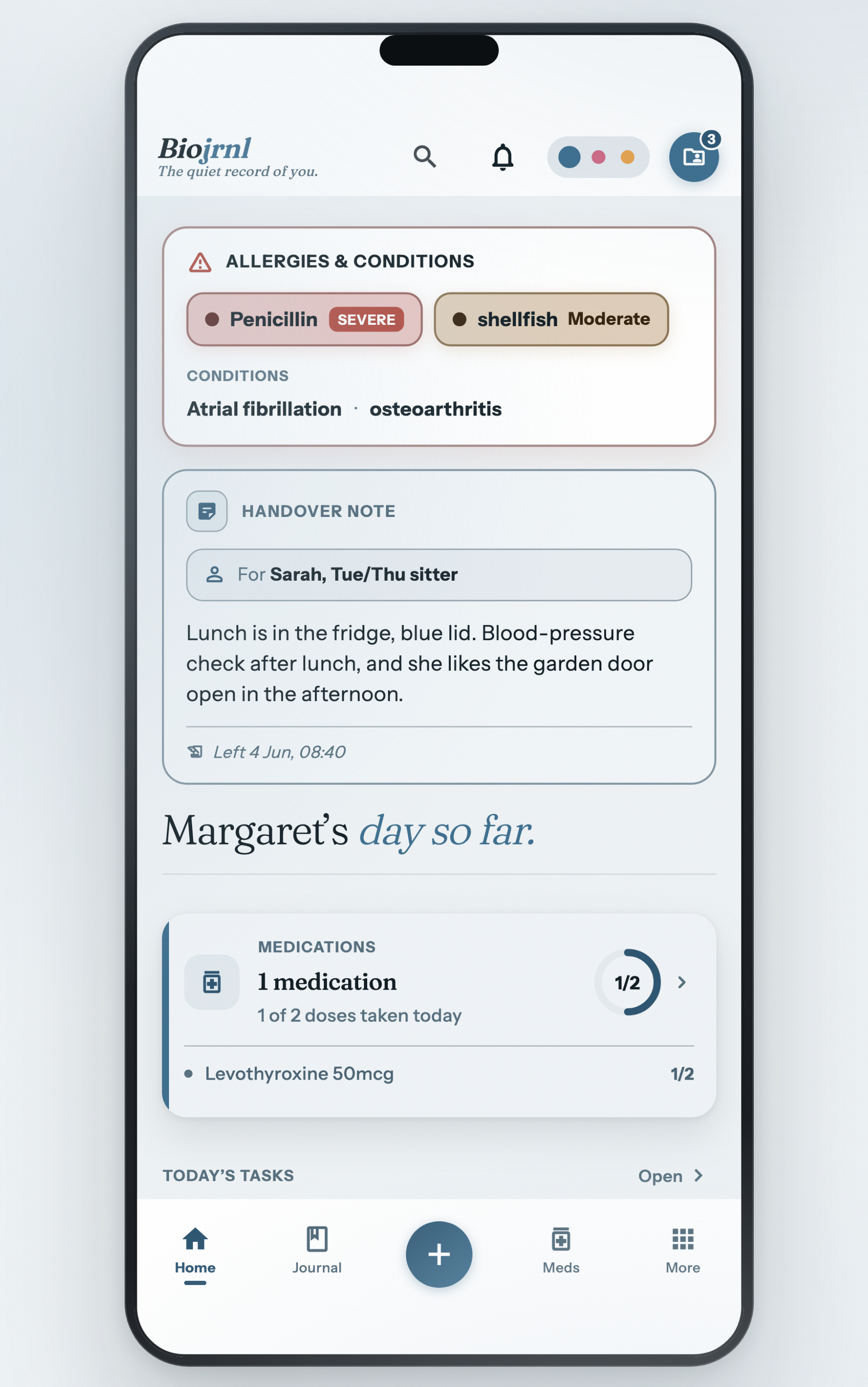
Biojrnl is a private health journal for recording events, medicines, appointments, vaccinations, test results and documents in your own words.
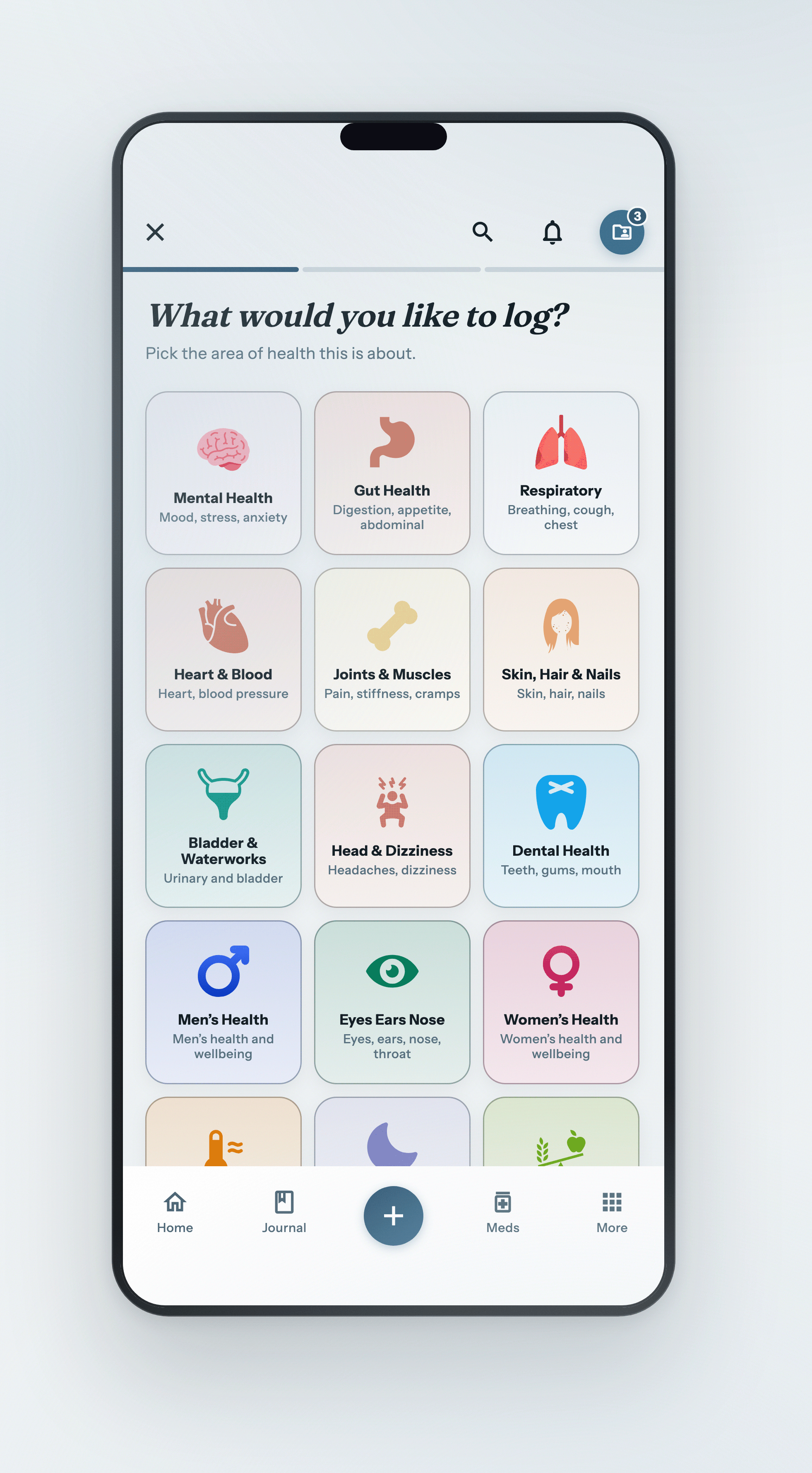
It is not a messaging service and it is not designed to build a court record. The other parent does not have to take part. You can keep the record yourself and use it at appointments.
Separate child profiles are included in the Family and Care plans. A guest view lets you choose what another person sees and for how long. The person you invite can use a free Biojrnl account and does not need their own paid plan. A co-manager has broader access for somebody who shares the ongoing job.
The journal is kept in an encrypted store on your phone. If you switch on backup, or share a record, it is also stored in your Biojrnl account on servers in the EU. The information is encrypted while it travels and while it is stored. No AI reads your entries, there are no adverts and Biojrnl does not sell your information.
Biojrnl records what you enter. It does not interpret symptoms, diagnose a condition or recommend treatment.
Who tells the other parent?
In everyday life, you do. The useful version takes four lines: what was given, what changed, what advice you received and what happens next. A short record gives both homes somewhere firmer than memory to start.
You can learn more about Biojrnl and check current app availability at biojrnl.com.
Biojrnl is a personal journal for your own records. It does not provide medical or legal advice, diagnosis or treatment. If you are worried about a child's symptoms, medicine or reaction, speak to a qualified healthcare professional.
Follow us


